


Jeffrey Fouche-Camargo, DNP, WHNP-BC, CPCHE, is the Founding Director of the Doctor of Nursing Practice (DNP) Program at Antioch University, where he leads curriculum development and program innovation grounded in health equity, social justice, and learner-centered education. He has extensive experience in innovative graduate and undergraduate nursing curriculum design, program assessment, and evaluation of student learning outcomes across multiple nursing education settings. In addition to his foundational leadership at Antioch University, Dr. Fouche-Camargo served as a charter faculty member for the Bachelor of Science in Nursing (BSN) program at Georgia Gwinnett College, contributing to the development and implementation of a new prelicensure nursing curriculum.
Dr. Fouche-Camargo earned his Bachelor of Science in Nursing, cum laude, from the Medical College of Georgia in 1994. He completed his Master of Science in Nursing at Georgia State University in 2003 with dual specializations in Perinatal Nursing and Women’s Health Nurse Practitioner, and later earned his Doctor of Nursing Practice degree from Georgia Regents University in 2014.
A nationally recognized speaker, Dr. Fouche-Camargo presents on topics including fetal heart monitoring, obstetric emergency and critical care, inpatient obstetric certification review, healthcare equity, and gender-related health. His academic and clinical interests include advanced nursing education, curriculum innovation, inclusive healthcare, reproductive and gender-related health, and the integration of equity and social justice into nursing practice and systems leadership.
Dr. Fouche-Camargo is board-certified as a Women’s Health Nurse Practitioner and holds certification as a Certified Professional in Clinical Health Equity. In 2010, he was recognized as the March of Dimes Advanced Practice Nurse of the Year.
He has maintained longstanding leadership within the Association of Women’s Health, Obstetric and Neonatal Nurses, including selection as an Emerging Leader in 2011 and service as Georgia Section Chair from 2015 to 2017. He also served on three national Annual Program Committees, including serving as national co-chair in 2015. Dr. Fouche-Camargo is a member of Sigma Theta Tau International Honor Society of Nursing and previously served as president of the Epsilon Alpha chapter.
Outside of academia and clinical practice, he enjoys hiking to waterfalls, international travel, and pursuing his goal of visiting all seven continents.
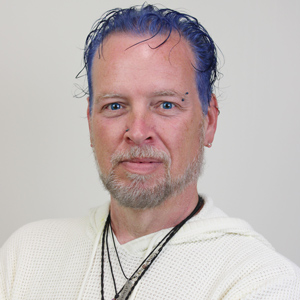
Director of DNP Program
Graduate School of Nursing and Health Professions
- Doctor of Nursing Practice, Georgia Regents University, Augusta, GA
- Master of Science in Nursing, Women’s Health Nurse Practitioner, Perinatal Clinical Nurse Specialist, Georgia State University, Atlanta, GA
- Bachelor of Science in Nursing, Medical College of Georgia, School of Nursing, Athens, GA
My path to nursing and nursing education was not a conventional one. From
an early age, I understood education as a pathway to possibility. My father, the only
one of nine siblings to attend college, taught me that education could open doors
and make dreams attainable. I entered college intending to become a foreign
language teacher, while my mother repeatedly encouraged me to consider nursing
because she believed it suited who I was. At the time, however, my own limited
understanding of nursing prevented me from seeing it as an academic and
professional discipline. It was only after working as an emergency department
registration clerk and discovering that the nurses with whom I worked held
baccalaureate degrees that I began to understand nursing differently. That
discovery changed the direction of my life.
My own experience reminds me that education expands what people are
able to imagine for themselves. Learners enter educational spaces with prior
knowledge, experiences, identities, assumptions, aspirations, strengths, and
uncertainties. Education does more than add information to what they already
know. At its best, it changes patterns of understanding, creates new possibilities,
and allows learners to see themselves, their profession, and the world differently.
My philosophy of teaching is grounded in the same unitary and caring worldview
that informs my philosophy of nursing. I understand learners as whole, irreducible
human beings who exist in continuous relationship with their environments.
Students cannot be meaningfully reduced to examination scores, assignment
performance, learning styles, deficits, or isolated competencies. Each learner
brings a unique pattern of personal history, culture, professional experience, ways
of knowing, relationships, responsibilities, and aspirations into the educational
environment. Learning emerges through the dynamic interaction of the learner,
teacher, knowledge, other learners, and the broader social and professional
environment.
Teaching, therefore, is fundamentally a relational and reciprocal process. I
do not view knowledge as something possessed by the teacher and transferred
intact to the student. Although I bring disciplinary expertise and responsibility for
guiding the learning experience, I also learn through every encounter with students.
Their questions may challenge my assumptions, reveal perspectives I had not
considered, or cause me to reconsider how knowledge is organized and
understood. I encourage students to question, challenge, explore, and disagree
thoughtfully. Intellectual curiosity and respectful dissent are not disruptions to
learning; they are essential components of it.
This reciprocity reflects my belief that caring is central to teaching. Caring
in education does not mean lowering expectations or protecting learners from
intellectual challenge. Rather, it means recognizing the humanity, potential, and
dignity of each learner while creating the conditions in which growth can occur. A
caring teacher is present, attentive, authentic, and responsive while also
maintaining meaningful standards and inviting students toward increasingly
sophisticated ways of thinking. Caring and rigor are not opposites. When learners
know that they are respected and that their perspectives matter, they are better
able to take intellectual risks, acknowledge uncertainty, receive feedback, and
grow.
For this reason, equity, diversity, inclusion, and belonging are
foundational to my philosophy of teaching. Students do not enter educational
environments from equivalent social positions or with identical experiences,
resources, opportunities, or senses of belonging. An equitable educator recognizes
these differences without reducing students to them. Equity requires attention to
the structures, assumptions, policies, and practices that can facilitate learning for
some while creating barriers for others.
Diversity enriches learning because nursing and healthcare cannot be
understood from a single perspective. I intentionally seek to expose learners to
differences in identity, culture, experience, discipline, worldview, and ways of
knowing. Inclusion requires more than having diverse individuals present; it
requires creating opportunities for those perspectives to meaningfully influence the
learning environment. Belonging goes deeper still. I want students to experience
themselves not as visitors who must conform to an established academic culture,
but as legitimate participants in the creation of professional and disciplinary
knowledge.
I therefore view the learning environment as an active dimension of
education. Just as people and environments are inseparable within a unitary
perspective of nursing, learners and learning environments continually influence
one another. The tone of a classroom, the language used by the instructor, the
examples selected, whose scholarship is represented, how disagreement is
handled, whose voices receive attention, and whether uncertainty is safe all shape
learning. I have a responsibility to intentionally create environments characterized
by curiosity, respect, psychological safety, intellectual challenge, and belonging.
Intentionality is consequently central to my work as an educator. Teaching is never
neutral. Every curricular choice communicates something about what knowledge is
valued, whose experiences matter, what counts as evidence, and what kind of
professional the learner is being invited to become. I strive to enter teaching
encounters intentionally, attentive not only to what students need to know but also
to how the educational experience may shape their understanding of themselves
and others. The goal is not to produce students who reproduce my thinking. It is to
create the conditions in which learners can develop their own informed, ethically
grounded, and critically examined professional identities.
A central purpose of teaching is helping learners transform information into
knowledge, knowledge into understanding, and understanding into meaningful
action. New information gains meaning when learners can connect it with what
they already know, examine it from multiple perspectives, apply it to authentic
problems, and reconsider their existing assumptions in light of it. I frequently use
analogies, visual representations, cases, discussion, simulation, and other forms of
active learning to make complex ideas visible and to help learners recognize
relationships among concepts.
In nursing education, this process must ultimately extend beyond knowing to
praxis. Nursing knowledge takes on its fullest meaning when learners can
thoughtfully integrate evidence, disciplinary knowledge, clinical expertise, ethical
reasoning, caring, and awareness of context in their practice. Simulation, case
analysis, scholarly inquiry, reflection, and experiential learning provide
environments in which learners can rehearse this integration, encounter
complexity, make decisions, receive feedback, and refine their judgment without
reducing professional practice to the performance of technical tasks.
I believe the development of critical thinking and clinical judgment
requires both knowledge and space for emergence. These capacities cannot simply
be imparted by an instructor. Educators can introduce frameworks, model
reasoning, make thinking visible, pose difficult questions, provide feedback, and
create increasingly complex opportunities for learners to practice. Ultimately,
however, judgment develops as learners integrate knowledge with experience and
begin to recognize patterns, relationships, context, uncertainty, and competing
possibilities for action.
My philosophy also recognizes that there are multiple ways of knowing.
Empirical evidence is indispensable, but professional knowledge cannot be limited
to what can be quantified. Nursing requires ethical, personal, aesthetic, relational,
and emancipatory knowing as well as scientific knowledge. I therefore encourage
students to examine not only what they know, but how they know it, whose
knowledge is represented, whose knowledge may be absent, and what
assumptions underlie claims to knowledge. Developing this epistemic awareness
is particularly important for nurses who will lead practice, influence systems,
generate scholarship, and address inequities in health and healthcare.
I believe education can either reproduce shame and silence or create space
for curiosity, understanding, agency, and liberation. This is particularly apparent in
the teaching of human sexuality, which I understand as a normal and integral
dimension of human health and experience. I approach sexuality with the same
intellectual seriousness, openness, and respect afforded to any other dimension of
human life. A sex-positive approach to education does not prescribe how
individuals should experience or express sexuality. Rather, it affirms diversity,
consent, agency, pleasure, relationship, and informed choice while challenging
stigma, pathologization, and assumptions that can interfere with equitable care. In
teaching sexuality and gender-related health, I strive to create learning
environments in which students can examine unfamiliar ideas, question inherited
assumptions, and become more comfortable engaging with the full range of human
experience without shame or judgment. This reflects my broader belief that learners
should be prepared not merely to tolerate human difference, but to approach it with
curiosity, humility, and respect.
Ultimately, I view education as an intentional, caring, and transformative
relationship among learners, educators, knowledge, and environment. My
responsibility is not merely to prepare students to perform professional roles as
they currently exist. It is to help them develop the knowledge, curiosity, judgment,
courage, and sense of responsibility necessary to imagine what nursing and
healthcare could become.
The measure of successful teaching, therefore, is not simply what students
can recall at the end of a course. It is whether they leave better able to think,
question, connect, care, act, and continue learning. I hope that students leave my
courses with greater confidence in their own capacity to contribute, deeper respect
for the humanity and perspectives of others, a commitment to equity and justice,
and an enduring curiosity that carries them beyond the boundaries of any
classroom.
At its deepest level, my philosophy of teaching rests on the belief that
learning is a shared human process of becoming. Teacher and learner participate
together in creating possibilities that did not previously exist. In that sense,
education and nursing are inseparable expressions of the same commitments: to
caring, human dignity, intentionality, equity, belonging, interconnectedness, and
the possibility of transformation.
- Costa, Monika; McKelvey, Michele M.; Kuhnly, Joan Esper; Holland, Tamara; Fouche-Camargo, Jeffrey. (2026). Empowering Students as Advocates for Health Equity: A Multisite Multimethod Study. Nursing Education Perspectives, 47(1), 23-29. https://doi.org/10.1097/01.NEP.0000000000001484
- Fouche-Camargo, J. S. (2020). Uterotonics and Tocolytics. In D. Mattison & L. Halber (Eds.), Clinical Pharmacology During Pregnancy (2nd ed.). Elsevier.
- Fouche-Camargo, J. S. (2019). Implementing Skin-to-Skin Contact in the Obstetrical Surgical Suite Project Plan. Journal of Nursing and Healthcare Management, 2(2), 1-8.
- Fouche-Camargo, J. S. (2019). Integrating Concepts of Mental Health and Maternal/Newborn Nursing Into a Single Course. Journal of Nursing and Healthcare Management, 2(3), 1.
- Fouche, J. S. (1996). Fathers: A Loving Tribute [book review]. Journal of Human Lactation, 12, 335.
- Fouche-Camargo, J. S. (2021). AWHONN Louisiana Section and AWHONN Metro Atlanta Chapter. Virtual Presentation. “Novel mRNA Vaccines Against SARS-CoV-2.”
- Fouche-Camargo, J. S. (2020). New Standards for Maternal Safety: Practical Strategies for Implementation. Virtual Conference. “Proper Measurement of BP and Believing the BP You Measure.”
- Fouche-Camargo, J. S. (2020). New Standards for Maternal Safety: Practical Strategies for Implementation. Virtual Conference. “Obstetric Hemorrhage: Overview of New Standards.”
- Fouche-Camargo, J. S. (2016). Rocky Mountain Childbirth Conference. Billings, MT. “Hypertensive Disorders of Pregnancy: Assessment, Diagnosis, and Management.”
- Fouche-Camargo, J. S. (2016). Rocky Mountain Childbirth Conference. Billings, MT. “Intrapartum Oxytocin Management: Follow the Science.”
- Fouche-Camargo, J. S. (2016). Rocky Mountain Childbirth Conference. Billings, MT. “Secrets of Documentation Everyone Should Know: Limiting Liability in Perinatal Nursing.”
- Fouche-Camargo, J. S. (2015). March of Dimes Perinatal Nursing Conference. Chicago, IL. “Hypertensive Disorders of Pregnancy.”
- Fouche-Camargo, J. S. (2015). Sigma Theta Tau International Nursing Research Congress. San Juan, Puerto Rico. “Implementing Skin-to-Skin Contact in the Obstetric Surgical Suite.”
- Fouche-Camargo, J. S. (2015). AWHONN Florida Section Conference. Sanibel Island, FL. “Hypertensive Disorders of Pregnancy: Assessment, Diagnosis, and Management.”
- Fouche-Camargo, J. S. (2015). AWHONN Florida Section Conference. Sanibel Island, FL. “Management of Category II Electronic Fetal Monitor Tracings.”
- Fouche-Camargo, J. S. (2015). AWHONN Florida Section Conference. Sanibel Island, FL. “Intrapartum Oxytocin Management: Follow the Science.”
- Fouche-Camargo, J. S. (2015). Nursing Perspectives Conference. Callaway Gardens, GA. “Hypertensive Disorders of Pregnancy: Assessment, Diagnosis, and Management.”
- Fouche-Camargo, J. S. (2015). Issues and Controversies in Perinatal Practice. Bangor, ME. “Management of Category II Electronic Fetal Monitor Tracings.”
- Fouche-Camargo, J. S. (2015). Issues and Controversies in Perinatal Practice. Bangor, ME. “Hypertensive Disorders of Pregnancy: Assessment, Diagnosis, and Management.”
- Fouche-Camargo, J. S. (2015). Issues and Controversies in Perinatal Practice. Bangor, ME. “Secrets of Documentation Everyone Should Know: Limiting Liability in Perinatal Nursing.”
- Fouche, J. S. (2014). AWHONN National Convention. Orlando, FL. “Hypertensive Disorders of Pregnancy: Assessment, Diagnosis, and Management.”
- Fouche, J. S. (2013). AWHONN Illinois Conference. Galena, IL. “Collaboration Between EMS, ED, and L&D.”
- Fouche, J. S. (2013). AWHONN Illinois Conference. Galena, IL. “Modifications to BLS, ACLS, and ATLS/ATCN for Pregnancy.”
- Fouche, J. S. (2013). AWHONN Illinois Conference. Galena, IL. “Cardiovascular Disease During Pregnancy.”
- Fouche, J. S. (2013). AWHONN Illinois Conference. Galena, IL. “Ongoing Professional Practice Evaluation and Peer Review in Nursing.”
- Fouche, J. S. (2013). Focus on Emergency Medicine. Lawrenceville, GA. “Considerations in the Pregnant Arrest Patient.”
- 2010 Advanced Practice Nurse of the Year, March of Dimes
- 2011 Emerging Leader, Association of Women’s Health, Obstetric, and Neonatal Nurses