


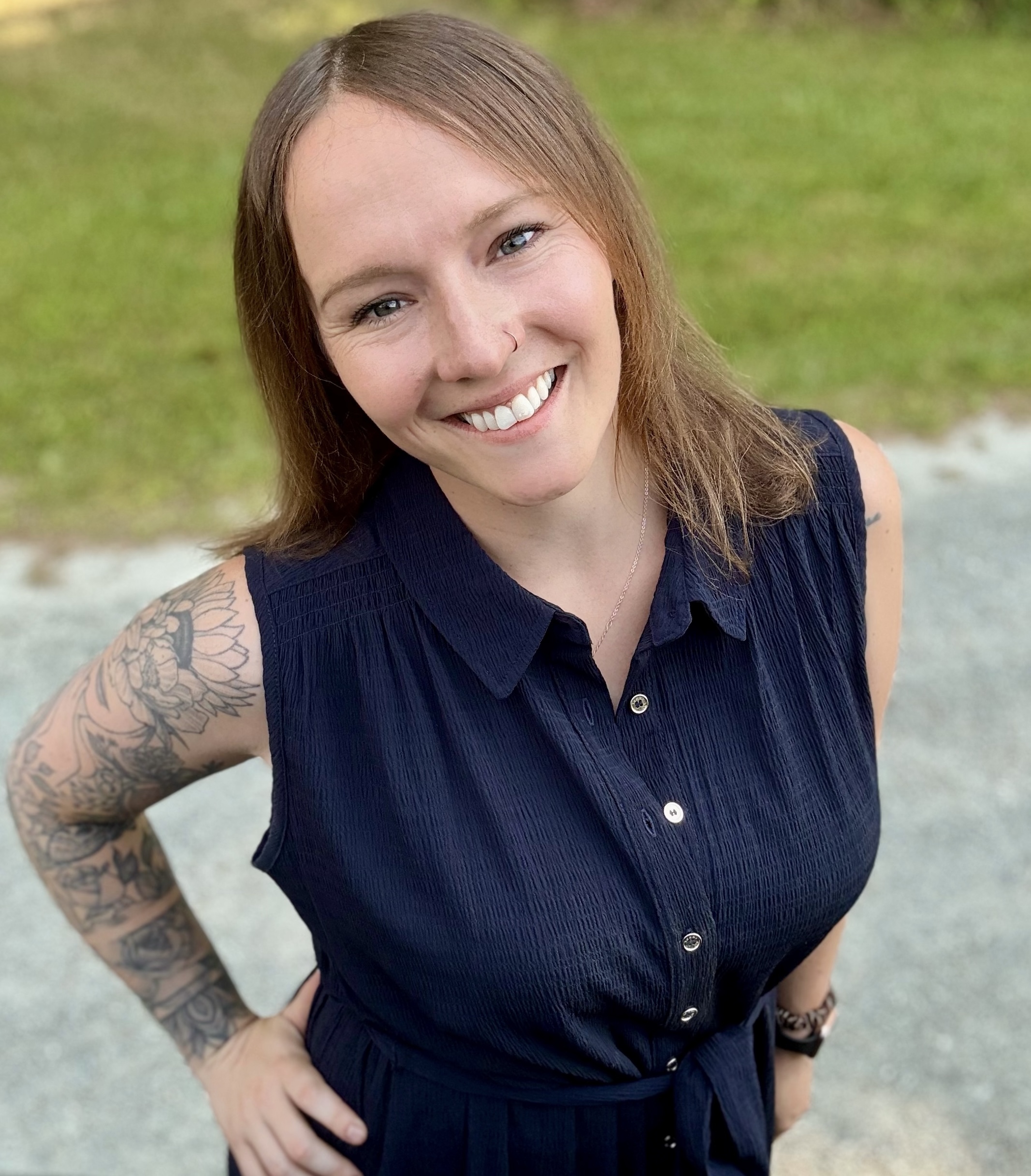
Dr. Tori Benson is teaching faculty in the Clinical Mental Health Counseling program at Antioch University. She serves as a faculty advisor to Keene Weekend students, course mentor for Crisis Counseling, and a member of the curriculum committee, where her focus is Universal Design for Learning. An Antioch alum, Tori earned her MA in Clinical Mental Health Counseling with a Substance Abuse concentration from Antioch University New England in 2017 and returned to teach as an adjunct before joining the full-time faculty in 2026.
Tori is a Licensed Clinical Mental Health Counselor, Licensed Alcohol and Drug Counselor, and National Certified Counselor, as well as an LGBTQIA Affirmative Certified Therapist. Her career has spanned addiction treatment, school-based and outpatient mental health, crisis counseling, and clinical leadership, including serving as clinical director of a school district mental health program, where she created a new school-based program and supervised all mental health staff. She brings this range of clinical experience directly into the classroom.
Tori holds a PhD in Counselor Education and Supervision from the University of the Cumberlands. Her teaching is grounded in humanistic, person-centered learning theory. She is committed to equity, inclusion, and the gatekeeping responsibilities of counselor educators, including affirming care for LGBTQIA clients and students.
- PhD, Counselor Education and Supervision, University of the Cumberlands
- MA, Clinical Mental Health Counseling (Substance Abuse Concentration), Antioch University New England
- BA, Psychology, Colby-Sawyer College
“When one teaches, two learn.” These five words from Robert Heinlein capture the foundation of my teaching philosophy. To teach is to enter a relationship that honors the whole learner and asks the educator to stay curious, humble, and open to growth. I do not see teaching as a perfected skill. I see it as a continuous practice of reflection, and I learn as much from my students as they learn from me.
My approach is grounded in humanistic learning theory and the person-centered principles of Carl Rogers and Abraham Maslow. I believe all learners are capable of growth when they feel respected, seen, and heard. In the same way I practice counseling, I teach with empathy, unconditional positive regard, and authenticity. Adult learners bring their lived experiences, values, and motivations into the classroom, and my role is to meet them where they are, build trust, and help them find meaning in their learning. When students feel safe and valued, they are more willing to explore their edges and take the risks that growth requires.
Equity and inclusion are central to my teaching identity. I want every student, regardless of background, ability, or perspective, to feel both welcomed and challenged. That means examining my own biases, asking for feedback, and designing courses with Universal Design for Learning in mind so that materials and assignments work for a wide range of learners. It also means teaching students to meet difference with curiosity, because counseling is inherently a multicultural act.
I move through class time dynamically, blending lecture, practice, and discussion. I value lecture when it is grounded in real clinical examples, but I also know that hearing something and feeling something are very different experiences. So my classrooms are full of practice: triads, dyads, fishbowls, and case consultation, followed by time to process what came up. When it is created with care, the classroom is a safe place for counseling students to try, stumble, and sharpen their skills before they sit with real clients.
I see assessment as collaborative reflection on growth rather than a measure of worth, and as a mirror of my own teaching. I give feedback that is specific and strength-based, and I want students to know where they stand and what support is available long before any concern becomes serious. When a student is struggling, my first move is always to talk with them, build a plan together, and walk alongside them as they grow. Counselor educators also carry a responsibility to the profession and to future clients, and I take it seriously because I want every student I teach to be well prepared for the work. I believe honest, caring conversations, even the uncomfortable ones, are part of how we become good counselors.
At my core, I am a lifelong learner who shows up as myself and invites students to do the same. I hope they leave my classes more open-minded, more aware of themselves and their biases, and ready to keep learning from the people they work with. If Heinlein is right, they will be teaching me, too.