


Doctor of Nursing Practice: BSN-to-DNP with MSN Included Family Nurse Practitioner (FNP)
Transform Primary Care from the Inside Out
Advance your career with a BSN-to-DNP with MSN included Family Nurse Practitioner (FNP) program designed to prepare nurses for advanced practice in primary care. This online DNP FNP program equips you with the clinical expertise to diagnose and manage acute and chronic conditions across the lifespan while leading change in complex healthcare systems.
Grounded in a holistic caring framework and a commitment to health equity and social justice, the curriculum strengthens clinical reasoning, differential diagnosis, and evidence-based practice. Graduates are prepared to deliver comprehensive primary care, improve outcomes for diverse populations, and influence healthcare policy. This primary care nurse practitioner program also develops leadership and systems-level skills to transform healthcare delivery. Graduates are eligible to sit for national FNP certification exams through the ANCC or AANP.
Program Overview
The Doctor of Nursing Practice (DNP) Degree BSN-to-DNP FNP track prepares nurses to provide primary family healthcare and leadership with an emphasis on social justice and health equity using a holistic caring framework in an increasingly complex environment. This program is designed for nurses who hold a Baccalaureate Degree in Nursing (BSN) who wish to advance their knowledge, education, and skills to practice in an advanced practice role as an FNP.
The program's emphasis is to foster the FNP’s abilities to think critically, make differential diagnoses, use evidence-based findings to improve healthcare outcomes, and be accountable for the provision of healthcare to diverse individuals and families in the areas of health promotion, disease prevention, management of acute and chronic health conditions, and primary care. The FNP provides clinical management of primary care conditions in various clinics and community-based settings. The curriculum develops nurses committed to scholarly, evidence-based practice, innovation, testing care delivery models, and evaluating health outcomes for the benefit of all members of society.
The development of clinical, organizational, economic, and leadership skills to design, implement, and evaluate programs of care delivery allows students to improve health outcomes and to transform healthcare. Students will gain knowledge and skill sets to promote positive health outcomes for individuals and populations, lead nursing and healthcare organizations, and influence health policy. Graduates are eligible to sit for the FNP national certification examinations offered by the American Nurses Credentialing Center (ANCC) or the American Academy of Nurse Practitioners (AANP).
Along the way, students may earn a Master of Science in Nursing (MSN) or Post-Graduate Certificate, enabling them to pursue certification and begin practice as an FNP while continuing toward their doctoral degree. Students can continue into the DNP immediately or return within five years to complete their scholarly doctoral project.
The Doctor of Nursing Practice program at Antioch University is pursuing initial accreditation by the Commission on Collegiate Nursing Education (https://www.ccneaccreditation.org). Applying for accreditation does not guarantee that accreditation will be granted.
Licensure
Nurse practitioner pathways are designed to prepare graduates for national certification and state advanced practice licensure eligibility.
President's Doctoral Fellowship
The President’s Doctoral Fellowships are awarded to students entering Doctoral programs. Awards of $12,000 are based on prior academic performance (minimum 3.40 GPA) and work/life experience. Awards are distributed equally over the first 2 registered years of a student’s program. Students must remain enrolled full time and your academic progress will be reviewed each term. Students must complete each course in which they are registered in order to continue receiving the scholarship.
Accreditation Information
(For Applicants – CCNE Accreditation in Progress) All Graduate Nursing programs must complete the CCNE approval process AFTER students are enrolled. In order to have sufficient enrollment and data, programs are encouraged to seek accreditation within 1-2 years.
Not yet. Our graduate nursing program is currently in the process of seeking initial accreditation from the Commission on Collegiate Nursing Education (CCNE). This process includes a comprehensive self-study, peer review, and site visit. The accreditation decision will follow after that.
This means our program has:
- Applied for accreditation
- Planning to submit a self-study report
- Will be hosting a CCNE site visit
Programs are not considered accredited until the CCNE Board of Commissioners makes an official accreditation decision.
Yes. If the program is granted CCNE accreditation, accreditation can be retroactively applied to include students who were enrolled during the time of the site visit. This means your degree can be considered accredited depending on your enrollment date and the final accreditation outcome.
The timeline typically follows this sequence:
- Final decision by CCNE Board: Late Spring 2028 (April/May)
- Self-study submission: August 2027
- CCNE site visit: September 2027
We will share updates with enrolled and prospective students as we move through each phase.
Our program:
- Meets national curriculum standards for certification
- Our goal is to build a high-quality program that supports both licensure and career advancement.
- Is led by experienced faculty
- Has strong clinical partnerships
- Smaller program size offers more attention and support for student success
- Faculty are intentional with student engagement and interactive learning
- Is committed to full compliance with CCNE and the state Board of Nursing requirements
No, as long as:
- The program is approved by the state Board of Nursing
- You meet the requirements of the certifying body (e.g., ANCC, AANP)
You may sit for your certification exam. The national certification body verifies graduation from a CCNE-approved program to release certification.
We will:
- Designate a faculty contact for questions related to accreditation status
- Share updates via email and our program website
- Host Q&A sessions for prospective and current students
Chair of Nursing Department: Dr. Regina Prusinski
Email: [email protected]
#on-demand
Info on Demand
Your schedule. Your time.
Explore Antioch’s nursing programs when it works for you. Watch our recorded information session to learn more about the program, the student experience, and what to expect at Antioch.
Degree Requirements
3 years
The U.S. Bureau of Labor Statistics projects a 40% increase in employment for nurse practitioners from 2023 to 2033, significantly outpacing the average growth rate for all occupations. This surge is driven by an aging population, a heightened focus on preventive care, and a growing shortage of primary care physicians.
Family Nurse Practitioners, in particular, are in high demand due to their ability to provide comprehensive care across all age groups. This versatility makes them especially valuable in underserved areas, including rural communities.
Some FNPs work in:
- Primary care and workplace clinics
- Correctional facilities
- Government health services
- Home health agencies
- Hospitals
- Long-term care facilities
- Military
- Schools
Program Details
Antioch University’s Department of Nursing is committed to quality nursing education that uses a holistic caring framework to promote excellence and safe healthcare. We encourage the personal and professional development of faculty, staff, and students, as well as an appreciation for diverse perspectives and humane values. Our goal is to prepare lifelong learners committed to the profession and the community, and to meet society’s changing healthcare needs.
- Lifelong learning
- Holistic care
- Diversity, inclusion, access
- Purposeful clinical experiences
- Integrity
- Develop competent nursing professionals who can integrate and synthesize knowledge from relevant fields of study to provide safe, high-quality, patient-centered care to diverse individuals, families, groups, and populations.
- Prepare graduate nurses and healthcare professionals for intentional collaboration with other health professionals and healthcare stakeholders to promote optimal, equitable health outcomes that foster social justice in the health promotion and disease management for marginalized populations.
- Equip graduate nurses and healthcare professionals to lead in complex health systems, creating interprofessional partnerships while reflecting on self-bias to pursue personal and professional development while advocating for all humanity.
- Cultivate ethical health professionals that use a variety of informatic technologies to generate, analyze, and synthesize knowledge to improve health and transform healthcare.
Student Learning Outcomes
- Integrate nursing science with knowledge from the natural and social sciences as a basis for the highest level of nursing practice for diverse populations. (E1, NP1)
- Provide organizational and systems leadership in advanced nursing practice roles to improve marginalized patient and healthcare outcomes, through advocacy and implementation of management and quality improvement strategies. (E5, NP5)
- Provide leadership for evidence-based practice, through translation of research for practice, dissemination of research findings, application of research findings for all populations, implementation of quality improvement methodologies, evaluation of practice outcomes, and participation in collaborative research. (E4, NP4)
- Demonstrate proficiency in the utilization and evaluation of information systems/technology resources for knowledge application, management of individual and aggregate data, and quality improvement for all marginalized populations. (E8, NP8)
- Provide leadership in the analysis, development, implementation, and evaluation of healthcare policies, congruent with advocacy for social justice, equity, and ethics in global healthcare. (E7, E10, NP7, NP10)
- Employ effective communication, collaboration, and leadership skills with individuals, groups, and teams to facilitate problem-solving and team functioning for equitable healthcare and healthcare delivery to marginalized populations. (E6, NP6)
- Analyze epidemiological, bio-statistical, environmental, and other appropriate diverse data for developing, implementing, and evaluating clinical prevention and population health interventions. (E2, E3, NP2, NP3)
- Demonstrate advanced levels of clinical judgment in designing, implementing, and evaluating equitable therapeutic interventions to improve patient and/or healthcare outcomes. (E2, NP2)
- Implement meaningful change in the areas of legal, ethical, economic, and professional functions of advanced nursing practice roles while advocating for all humanity. (E9, E10, NP 9, NP10)
- Integrate caring behaviors and patterns, including cultural competence and attention to underserved regional and global individuals and groups, into advanced nursing practice roles. (E3, NP3)
E = AACN Essentials: Core Competencies for Professional Nursing Education Domain
NP = NONPF Nurse Practitioner Core Competencies Domain

Elevating Your Nursing Career with a Proven Legacy
As Proud Co-Founder of the Coalition for the Common Good, Antioch University offers a program with a rich tradition of excellence, honed over 45 years by dedicated nursing professionals. Formerly anchored at Otterbein University, this initiative now thrives at Antioch, continuing a legacy of quality and practical expertise. Benefit from our flexible, student-centered graduate model, designed to empower you with clinical confidence and personalized support, ensuring you're prepared to excel in your nursing practice.
Faculty Spotlights
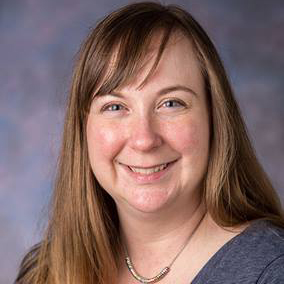
Regina Prusinski, DNP, CPNP-AC, FNP-BC
Chair

Diane White, PhD, RN
Dean

Deana Batross, DNP, RN, FNP-BC, PMHNP-BC
Director
How to Apply
Admission Criteria
- Baccalaureate degree (ACEN or CCNE accreditation) in nursing
- A current, valid, and unrestricted license as a Registered Nurse in the U.S., and current unrestricted licensure as a Registered Nurse in the state where the clinical experiences and the practice project will be conducted.
- Minimum of one (1) year paid clinical work experience within the past three years.
- Evidence of capacity for graduate study.
-3.0 GPA
-A Science GPA of 3.0 or higher on a 4.0 scale comprising grades in anatomy, physiology, pathophysiology, microbiology, statistics, and chemistry courses. - Strongly recommended statistics course with a grade of B or better.
- Three professional recommendations from a clinical supervisor, a peer (RN), and another clinician.
- Admissions Essay (APA Preferred) (Optional)
-summarize the applicant’s professional background;
-describe the role of the Family Nurse Practitioner and clinical areas of interest;
-discuss professional and career goals, and how these goals can be achieved in the educational program, as well as ideas for the final scholarly project; and describe past experiences and reflections that have influenced these goals.
-The essay should be carefully planned, written, and edited by the applicant. - Resume
- $50 application fee
*An interview may be required for all nursing applicants as part of the admissions process
Application Requirements
- Complete the online admissions application, including:
- Optional Personal Essay: Summarize your professional background; Describe past experiences and reflections that have influenced these goals; and discuss professional and career goals, and how these goals can be achieved in the Doctor of Nursing Practice program, as well as ideas for the final scholarly project. The essay should be carefully planned, written, and edited by the applicant.
- Professional resume. Also include leadership activities, scholastic awards, nursing organizational memberships, and community service, as applicable.
- Evidence of licensure and certification, if any. Include professional licensure numbers and the licensing state, and a copy of the certificate issued by your national board certification body. The Graduate School will verify licensure and certification, which will be added to the student's file.
- Submit official transcripts from all colleges or universities where you earned a degree or certificate (A cumulative GPA of 3.0 or higher is preferred). Email to [email protected] or mail to: Antioch University, Admissions Office, 900 Dayton Street, Yellow Springs, Ohio 45387
- Three letters of recommendation are required from people who are in a position to evaluate your professional (e.g., clinical supervisor, Peer (RN), other clinician, and academic (e.g., professor) work. The person making the recommendation may not be related to you.
- Interview with the Nursing Program faculty if needed. This interview will be conducted via Zoom (video conferencing).
- Students must submit documentation of meeting health requirements – including completion of the American Heart Association Basic Life Support (BLS) curriculum – prior to starting classes, and must submit documentation of keeping health requirements current throughout their course of study.
Optional: If you do not feel as if your academic transcript(s) reflect your current ability to be successful as a graduate student, please be sure to highlight a plan for being successful in this program.
All application materials submitted become part of an applicant’s file and cannot be returned.
Application Deadlines
| Semester | Application Deadlines |
|---|---|
| Spring | November 1 |
| Fall | July 1 |
| Please review the Academic Calendar for additional details. | |
If you have any questions during the process, please do not hesitate to contact us at [email protected]. Our faculty and staff are here to assist you throughout the application process.
Tuition
| Program | Cost |
|---|---|
| DNP (All Concentrations) | $765 per semester hour |
| MSN (All Concentrations) | $665 per semester hour |
| Certificates | Contact Admissions for Details |
| View the Cost of Attendance Components | |
Financial Aid
Many students finance their education through some form of financial aid. You may not be sure which federal, state, public, and private aid packages – such as loans, scholarships, and grants – are right for you. Our staff is here to help you so you can focus on what’s most important: beginning your academic program.
Antioch University is proud to partner with several schools and employers to offer scholarships and/or special educational benefits to employees, students, and alumni of select partner institutions. To learn more about these scholarships and to find out if you are eligible, talk with Admissions.

Start your Antioch Journey
Take your next step - talk to our admissions team to find the right program for you.