


PhD in Couple & Family Therapy
Foster strong interpersonal bonds.
The Doctor of Philosophy in Couple and Family Therapy (PhD in CFT) has a focus on Social Justice applications to couple and family therapy and prepares graduates for academic, leadership, supervision, and research careers. There is considerable focus on research training in this doctoral degree, and as a degree in CFT, there is also a clinical training component. In everything we do, we emphasize principles of social justice, and our students learn about ways to apply social justice principles in research, teaching, supervision, and clinical work.
This program is NOT designed to lead to state licensure. This degree is offered by Antioch University's New England campus.
Antioch University New England’s Couple and Family Therapy programs are accredited by the Commission on Accreditation for Marriage and Family Therapy Education (COAMFTE). This specialized professional accreditation ensures that the program meets national standards, not just state or regional standards, for couple and family therapy education. The MA program has been accredited since 1993, and the PhD program since 2010.
Program Overview
AUNE's PhD in CFT program is a low-residency program, designed to be completed in three years of full-time enrollment, with two years of coursework and practice experience, and one year of dissertation. Face-to-face meetings (residencies) will take place 3 times per year, and each residency is 5 days long. Between residencies, you will be working on class material and applying CFT concepts in clinical, teaching/supervision/leadership advanced practical experiences. Much of the learning will be facilitated online in a flexible format, and there will be weekly professional seminar meetings (group supervision experiences) facilitated online via video and/or voice conferencing. Students are not required to be located in the New England area, only to attend the residencies as scheduled, and still receive the benefits of regular face-to-face contact with instructors and fellow students. In this program, you will be able to use current clinical or training work positions as learning opportunities in these advanced practical experiences. For students who are located in New England, we have clinical and supervision training opportunities on campus at the Antioch University Couple and Family Therapy Institute, our campus-based training clinic for Master’s and Doctoral students. For students who are not local, we will assist you in finding suitable locations to get clinical and supervisory/leadership experiences. Clinical experiences in the program are designed to lead to licensure for those students who are not yet licensed. The PhD may also serve as a qualifying degree for licensure for those whose Master’s degree does not fit licensure requirements. The PhD in CFT program starts in the Fall semester each year, and students enter as a cohort. We work to build the cohorts as collaborative learning environments, and cohorts move through the program together. Each course in the program has a residency component and an online component, and student learning is evaluated through the successful completion of learning achievements. Students in the program will develop an academic portfolio that includes learning achievements dedicated to clinical theory, research, teaching, supervision, and leadership, all with an emphasis on social justice.
Residencies
Residencies are intense gatherings combining seminars, workshops, guest lectures, advising sessions, peer discussions, and student presentations. Each of the three residencies is five days of classes, plus travel days. The fall residency typically takes place on our Keene, NH campus in September; the spring residency typically takes place on our Los Angeles, CA campus in January; and the summer residency typically takes place on our Seattle, WA campus in June.
President's Doctoral Fellowship
The President’s Doctoral Fellowships are awarded to students entering Doctoral programs. Awards of $12,000 are based on prior academic performance (minimum 3.40 GPA) and work/life experience. Awards are distributed equally over the first 2 registered years of a student’s program. Students must remain enrolled full time and your academic progress will be reviewed each term. Students must complete each course in which they are registered in order to continue receiving the scholarship.
Additional Information
Program Length - 86 to 89 Credits
By the conclusion of the advanced practical experience requirements, the student must have spent one year, typically the first year (3 semesters), engaged in supervised clinical practice and one year (year 2 - 3 semesters) engaged in additional practical experience (teaching, consultation, leadership, and/or supervision). Students must have a clinical master's degree in a mental health field to be eligible for admission to the PhD program in CFT. Students without a background in CFT will be required to take additional prerequisite coursework. Note: Advanced practical experience placements may require criminal background checks as well as verification of up-to-date vaccinations. Additional degree requirements:
- Satisfactory completion of a doctoral dissertation that demonstrates doctoral-level scholarship.
- Satisfactory performance on the Qualifying Examinations at the end of the second academic year.
- Students must attend six residencies across the first two years of the program. Residencies are held near the beginning of each semester (Fall, Spring, and Summer).
- Full-time students have a maximum of six years from initial enrollment to complete all course requirements, practical experience requirements, and dissertation.
Details of coursework sequence and course descriptions can be found in the Academic Catalog.
Graduates of the PhD program in Couple and Family Therapy work in a variety of clinical and academic settings. We have graduates teaching in MFT and HDFS programs, while others are engaged in private practice or organizational leadership roles. The PhD opens doors for those interested in research, teaching and supervision, leadership, and advanced clinical work.
The mission of the Antioch University New England PhD program in Couple and Family Therapy is to develop highly competent advanced clinicians in CFT and to develop students who are competent in teaching CFT, in providing clinical supervision in CFT, and in conducting CFT-related research utilizing both quantitative and qualitative methodologies. CFT doctoral students will also develop a focus on social justice and human diversity issues across all areas of the curriculum. The competency areas and learning outcomes addressed in the CFT program are designed to meet the requirement of COAMFTE accreditation standards, version 12, advanced curriculum areas. Students in the CFT program are also expected to foster a professional identity as couple and family therapists (including joining AAMFT, the professional organization for couple, marriage, and family therapists).
| Competency Area | Learning Outcome |
|---|---|
| Advanced Clinical Skills in Couple and Family Therapy | Students will demonstrate advanced understanding of multiple family and couple therapy models |
| Advanced Relational/Systemic Clinical Theory | Students will develop a specialized clinical area that is grounded in research and is at an advanced level of intervention and understanding |
| Relational/Systemic Applications to Contemporary Challenges | Students will demonstrate the ability to develop relational/systemic innovations across multiple domains |
| Social Justice Applications | Students will demonstrate competency in social justice approaches to CFT teaching, research, supervision, and practice, demonstrating attention to multiple domains of diversity |
| Introductory Research Methods Quantitative and Qualitative | Students will demonstrate proficiency in quantitative and qualitative CFT research methods and analysis |
| Advanced Research Methods and Applications | Students will demonstrate understanding of change research with relationships and will demonstrate application of research methods through grant-writing, publication, and presentation |
| Couple and Family Therapy Supervision | Students will demonstrate competency in CFT supervision |
| Teaching/Leadership/Consultation in Couple and Family Therapy | Students will demonstrate competency in teaching, leadership, and/or consultation |
As a Commission on Accreditation for Marriage and Family Therapy Education (COAMFTE) accredited doctoral program, we are required to report a number of student achievement criteria on our website.
Social justice informs our thinking about training in the PhD program. We see social justice in Marriage and Family Therapy education as involving the following key concepts:
- Social justice clinical practice is focused on helping diverse families and contributes to the positive development of these families and their communities.
- Social justice implies an explicit action orientation.
- Social justice involves understanding the diversity of people and families:
- Diversity includes ability, sexual orientation, race, ethnicity, and country of origin, age, social class, religion, and gender (that is, systems that affect individual and family access to power and resources). Particular focus is on underserved and high-risk families.
- Diversity also includes diverse family structures, including extended kinship networks, gay and lesbian families, step-families, etc.
- Social justice has policy implications-therapists working from a social justice perspective work to effect supportive family policy that recognizes diversity and improves resiliency, and have a responsibility to participate in social and political systems affecting families.
- Social justice involves recognizing that social and legal systems affect the people we work with
- Social justice researchers have a responsibility to do socially informed research, which is sensitive to diversity.
Diversity is defined in terms of differences between groups of people with respect to structural disadvantage and systemic marginalization. These differences are related to such factors as gender, sexual identity, social class, ethnicity, race, religion, spirituality, age, health/ability, immigrant status, etc.
"To foster socially proficient couples and family therapists, we integrate all courses and clinical work with themes of social justice and diversity. One of our program’s top priorities is training diverse therapists here, who will become agents of change within their own communities."
Dr. Lucille Byno, Director, MFT Program Diversity at Antioch University
Antioch University as a system is committed to issues of social justice and diversity. To this end, we work to support diversity in as many ways as we can within the program. However, Antioch University New England is located in an area with very little racial diversity (New Hampshire is 94% White, and Keene is nearly 95% White). As a result, our faculty, supervisors, and students largely represent the area demographics in terms of racial diversity. However, because our clinical sites are located all over New England, many of our students work with families from a wide range of socio-economic statuses and religious backgrounds, and in some of the urban areas, with immigrant groups. Our department faculty includes White women and men who are heterosexual, lesbian, disabled, and multi-generational. Our adjunct faculty and field supervisors are fairly evenly split in terms of gender and are mostly White, with one or two Latino and African American supervisors, depending upon the yearly distribution of clinical sites. Our student body in the master’s program is predominantly female (about 85%) and mostly White at this time, but again, it reflects a diversity of socio-economic backgrounds, religious backgrounds, and sexual orientations. One aspect of diversity in our student population is age diversity, which has ranged from 22 to 68 years old. Our doctoral program student body tends to be very diverse and includes African American, Vietnamese American, Iranian American, Korean, and Turkish students.
Faculty Spotlights

Alice Scudder, MA
Adjunct Faculty

Rhiannon Beauregard
Affiliate Faculty
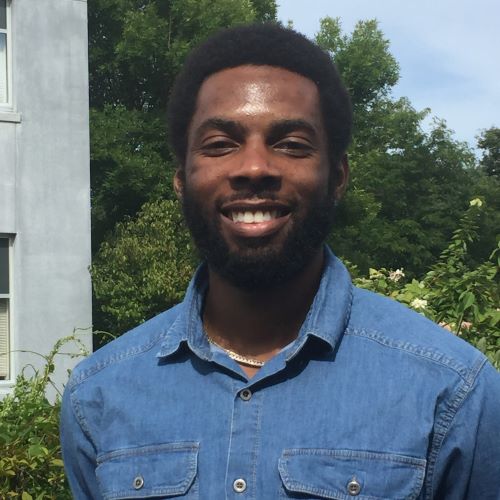
Denzel Jones, PhD
Interim Program Director

Tomoyo Kawano, PhD
Program Director
Admissions
Application Deadline
| Term | Priority Application Deadline | Final Deadline |
|---|---|---|
| Fall | February 1 | July 1 |
| After the priority deadline we begin a review of all complete applications until the cohort is full. | ||
Requirements
As a graduate school providing doctoral-level education, Antioch University New England assesses an applicant’s academic experience and promise, personal and interpersonal competence, and professional experience and promise. Our aim is to attract a talented, committed student body, marked by personal, ethnic, and cultural diversity. All doctoral students must maintain a full-time course load. Waiving required courses will be approved only in exceptional situations. Transfer coursework from another accredited doctoral program will be evaluated on a case-by-case basis. A degree from a CFT master’s program or other clinical master’s program is required.
How to Apply
- Complete the online admissions application (includes a non-refundable $50 application fee).
- Submit official transcripts in sealed envelopes from all accredited colleges and universities attended.
- email transcripts to [email protected], or
- mail to: Office of Admissions Antioch University New England 40 Avon Street Keene, NH 03431-3516
- Résumé
- Personal Statement
- Work Sample
- Three Letters of Recommendation – signed across the seal of the envelope
- If the applicant’s master’s degree is pending, we request a letter from the registrar with the anticipated date of graduation.
Admissions application materials should be mailed to: Office of Doctoral Admissions, Antioch University, New England, 40 Avon Street, Keene, New Hampshire 03431-3516
Interview
An interview with an Admissions Committee is required. Only those applicants who are judged to be an excellent fit with the educational goals of the program on the basis of their completed application materials will be invited for an interview. Interviews will take place between the end of February and the middle of March.
Admissions Decisions
Admissions decisions are made by a Doctoral Admissions Committee composed of faculty and admissions counselors. All completed applicant files will be evaluated, and the most suitable applicants will be invited for interviews. Applicants will be notified of the final admissions decision in April. We cannot give applicants specific feedback about their admissions decisions. All candidates who are accepted to the program must confirm their decision to enroll by submitting a $500.00 non-refundable deposit to hold their place.
International Students
International students must submit certified evidence of financial support for their educational and living expenses while at Antioch University New England. Applicants must request from the Office of Admissions the proper form for submitting this certified information. (This information is required in order to complete the I-20 paperwork for obtaining an F-1 student visa.)
Tuition & Financial Aid
Doctoral education is an investment in your future. Let us help you understand the costs and explore the resources available to help make your college education even more affordable. The majority of AUNE students finance their education through some form of financial aid. You may not be sure which federal, state, public, and private aid packages – such as loans, scholarships, and grants—are right for you. Our staff is here to help you, so you can focus on what’s most important: beginning your academic program at AUNE.
Cost
| Degree | Tuition Cost per Credit | Total Program Credits |
|---|---|---|
| Couple and Family Therapy, MA | $1,168 | 61 |
| Certificate: | ||
| Couple and Family Therapy, Post Masters’ Respecialization Certificate | $840 | Variable (27-30) |
| Couple and Family Therapy, Gender Affirming Clinical Practice Certificate | $866 | 12 |
| Couple and Family Therapy, PhD: | 86 | |
| Year 1: Fall or Spring | $17,768 semester | |
| Year 2: Summer, Fall, or Spring | $14,502 semester | |
| Year 3: Summer, Fall, or Spring | $11,284 semester | |
| Year 4: Summer, Fall, Spring | $8,071/semester | |
| View the Cost of Attendance Components | ||

Start your Antioch Journey
Take your next step - talk to our admissions team to find the right program for you.